

How To Set A Rivet In Leather
Introduction: Leather Hardware: Rivets
Now that we've learned how to cut and fold leather, we're going to acquire how to attach pieces of leather to each other by one of the simplest methods: riveting. Riveting requires hole punching, so we'll also accept a look at a few unlike tools for punching holes. Then nosotros'll put all these skills together to assemble our wallet!
In this lesson I'll be using:
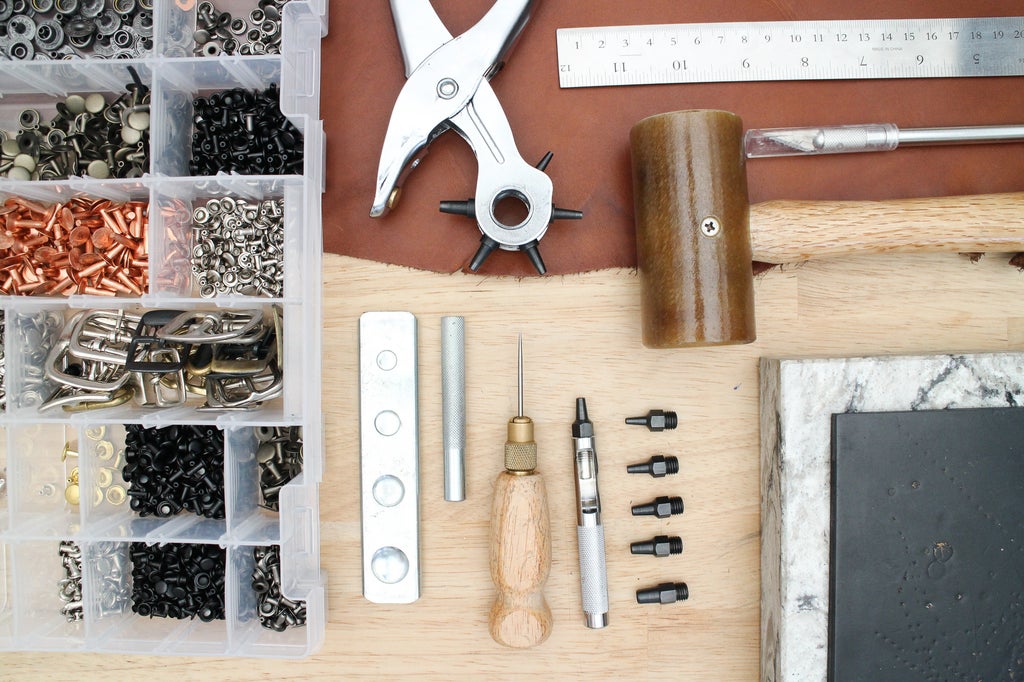
Step 1: Punching Holes With Rotary and Manual Punches
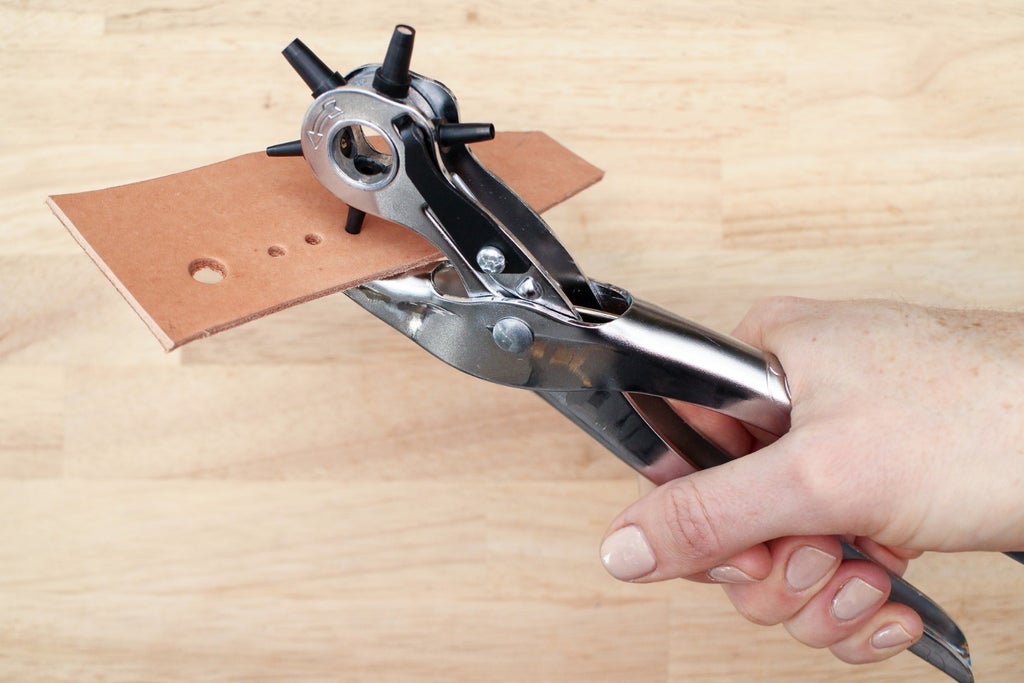
In lodge to adhere rivets, snaps and other hardware to leather, first you need to punch holes. Punching holes in strategic places can too be helpful when yous need to cut out slots or other complex internal shapes. There are a few different tools for pigsty punching that are better for different applications.
The Rotary Punch is the easiest to utilize and nearly convenient tool for punching holes. It has a rotating head with different punching blades to create holes of various sizes. To dial a hole, you just clasp down on the handles until you lot press the punch through the leather. Rotary punches are bully for punching holes in straps and other easily accessible areas, but they can only punch a hole about one 1/2"-2" from the edge of a piece of leather (or a little more if the leather is flexible enough to gather). Also they are not keen for punching through very thick leather because y'all can only use and so much force by squeezing the tool with your hand.
Like nigh tools, rotary punches simply work well if they are sharp, so keep yours sharp or buy replacement blades when they become dull. If your punch isn't making a make clean cut all the way through your leather, swiveling the leather around while clamping down on the dial will sometimes help it cut through.
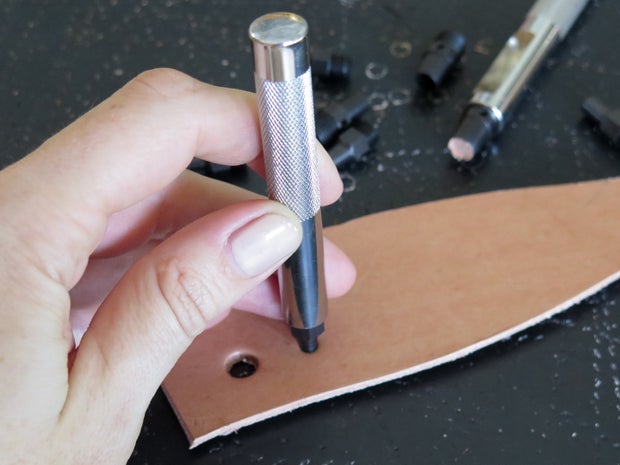
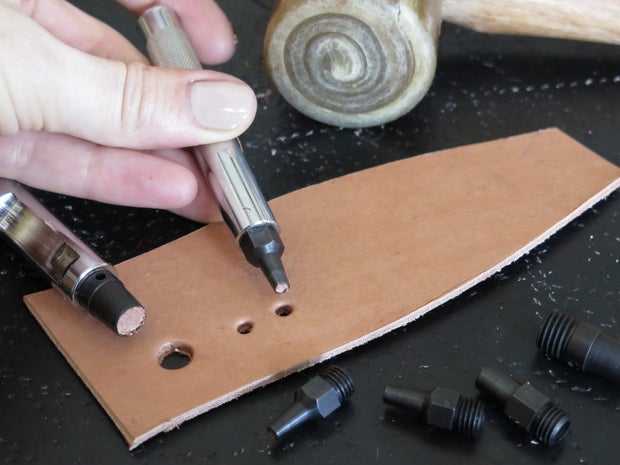
Manual Punches are a more versatile, if slightly less user-friendly way to dial holes. They allow you to punch in hard to attain places far from leather edges, and they can punch through very tough leather. The set I have has a single shaft that comes with interchangeable heads of dissimilar sizes.
To punch a pigsty with a transmission dial, place your leather over your poundo board or other soft punching surface. Hold your punch straight up and down on acme of your leather where you lot want to punch a hole, then hit it with a mallet. One strike with the mallet should be plenty to punch through, though with thicker leather you lot sometimes need to strike again.
Never punch directly on summit of a difficult surface like your metallic anvil or quartz. This will dull your punches very quickly. It is as well not a skilful idea to hit a metal tool with a metal hammer or mallet. This will eventually distort the height end of the tool making it harder to use.
Y'all tin can find punches in dissimilar shapes, like ovals for attaching buckles, or even decorative shapes like stars. Punches similar this can exist useful and fun for creating cut-out filigree patterns.
Pace 2: Rivets
Rivets are one of my favorite leatherworking tools because they are just so piece of cake to use, and I beloved the fashion they look. Rivets let you attach two or more pieces of leather together when they are set through holes in the leather. They come in a variety of finishes and then you can choose rivets that intentionally stand out against your leather or rivets that blend in. At that place are a few dissimilar kinds, but I'm only going to show you the easiest for now.
Rapid Rivets:
In my stance, these are the best kind of rivets because, every bit the name implies, they are quick and easy to set. Rapid rivets accept two parts, an finish with a stem that looks like a tiny mushroom, and an end with just a cap and no stalk. They are also frequently called double cap rivets because of the cap on both sides (though some variations accept ane stop that is hollow or decorative in some way).
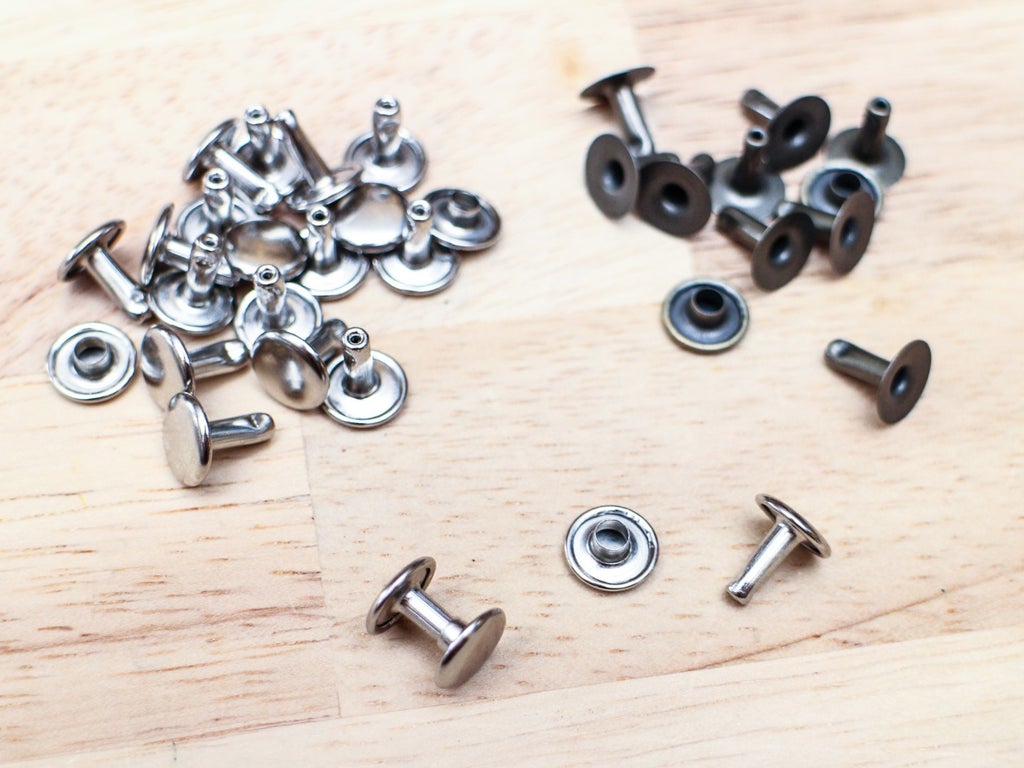
To attach these rivets, punch a pigsty the size of the rivet stalk, or slightly larger, insert the stalk into the hole from one side, and then snap the cap onto the end of the stem from the other side.
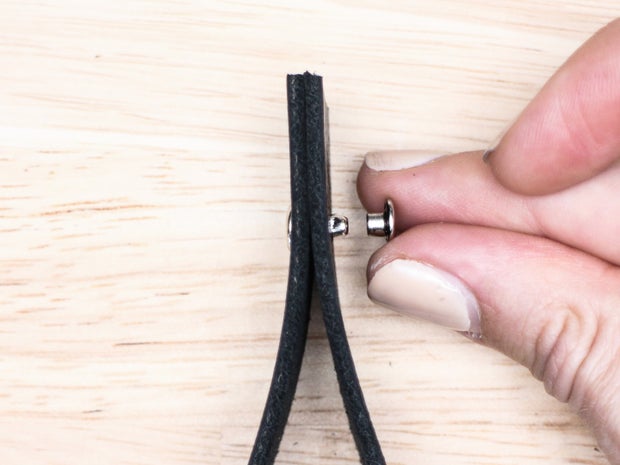
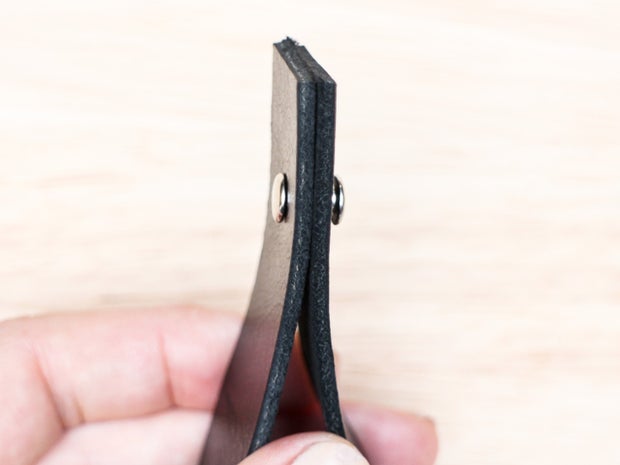
The correct way to set the rivets is past nesting the bottom cap in the right sized divot in the rivet setting base, and then using a mallet to pound downwardly on the top cap with a rivet setting shaft that has a concave cease. This volition keep the caps of the rivets slightly rounded rather than hammering them flat.
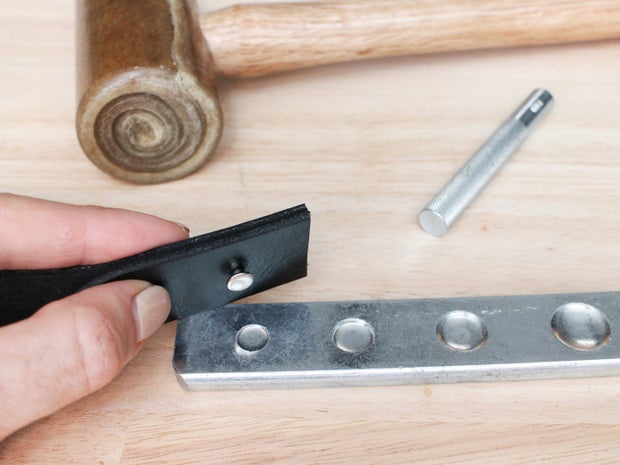
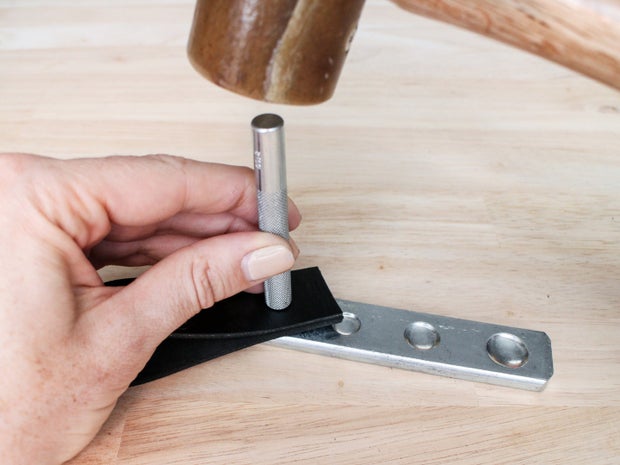
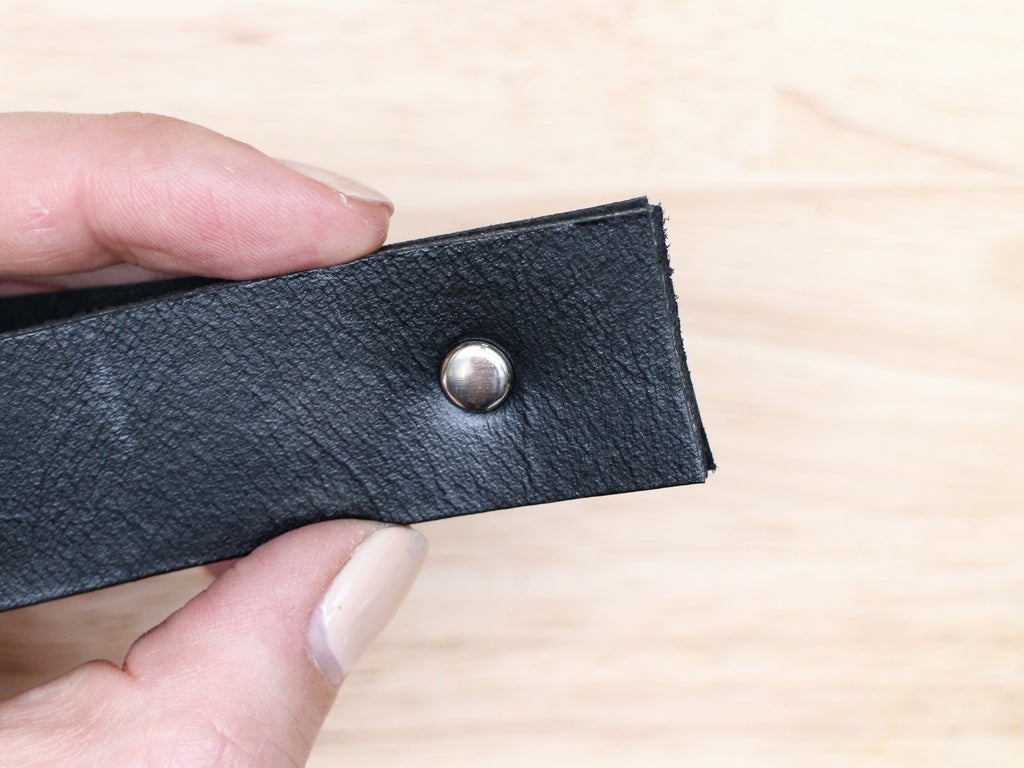
If you don't accept the rivet setter, nonetheless, or y'all would rather have flat-topped rivets, you tin can just gear up them on a hard, flat surface with a hammer. The dorsum of the rivet setting base of operations, or your quartz slab works well for this. Using a hammer does brand information technology a fleck easier to accidentally beat out or mark-upward the height of a rivet, but if you endeavour to hit straight-on it will ordinarily work fine.
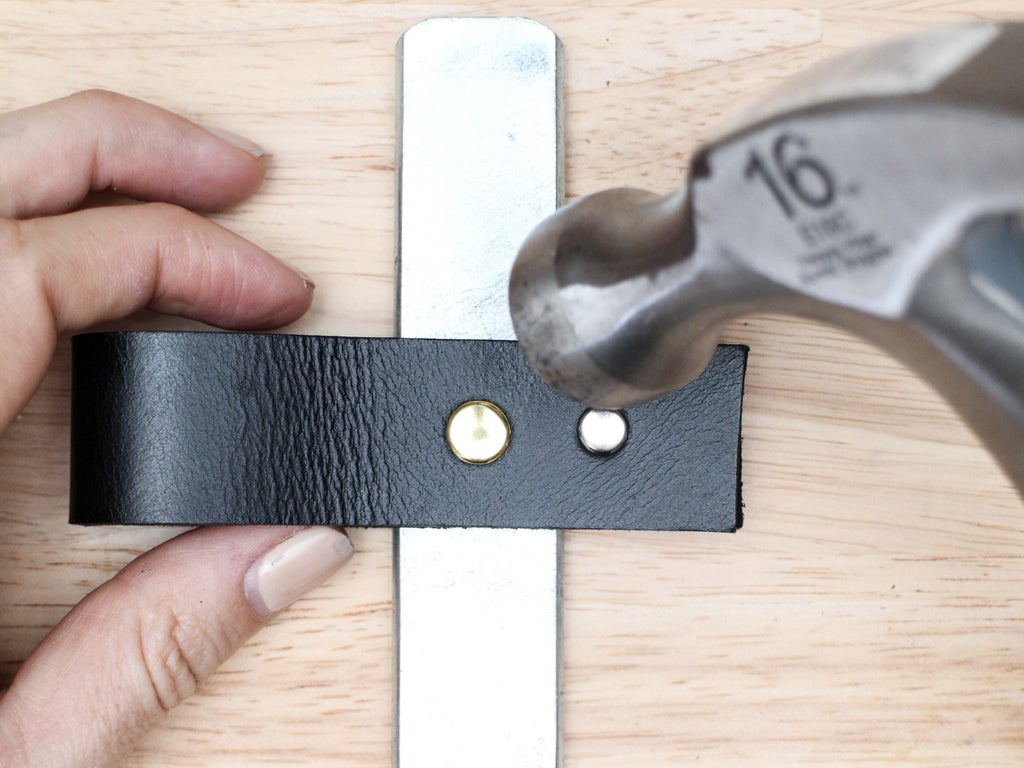
As you tin can see, these rivets come with different sized caps, but they also have different length stems. The size of the cap is mostly aesthetic, though information technology is good to apply larger caps for more heavy duty projects. The length of the stem, however, is important!
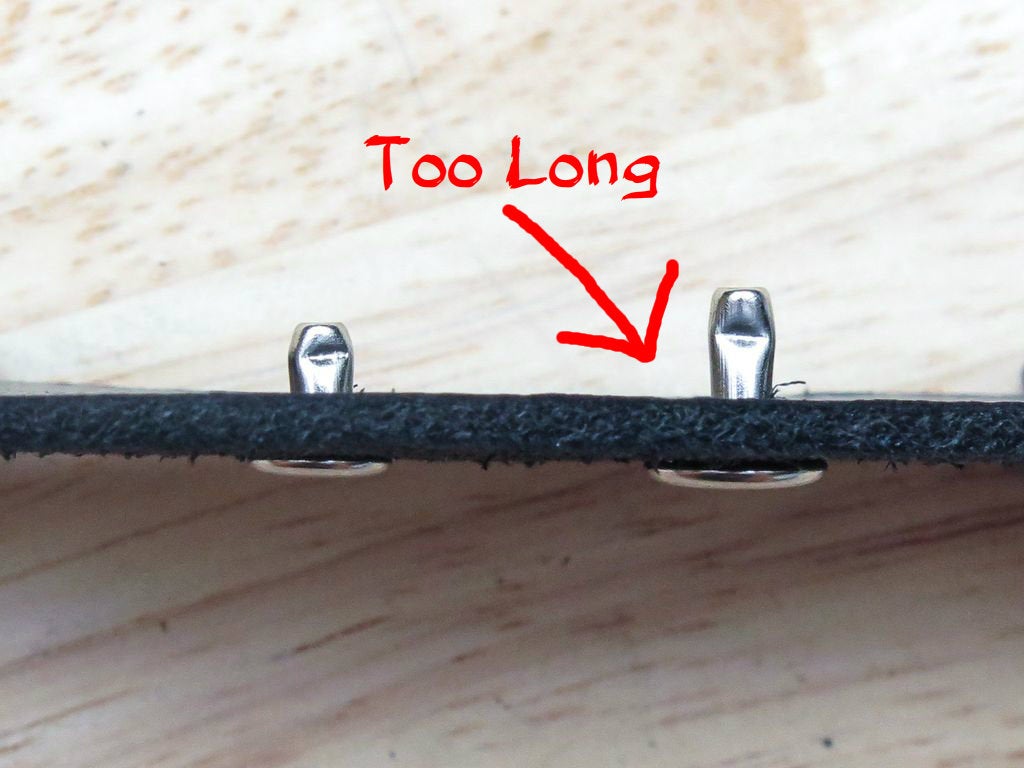
If the stem is too long, the rivet won't set up right, and if the stem is also brusk, you won't be able prepare it at all. You don't want the stem to extend more ane/8" beyond the leather. If it does stick out farther than this and y'all don't have another rivet pick, you lot can use a pair of nippers to cut off the very end of the stem. The rivet should still set correctly, just you should examination one on a fleck of leather start.
Step 3: Removing Rivets
It is inevitable that, at some point, you will prepare a rivet and and then slap yourself on the brow equally you realize that you put it in the wrong place or forgot to add the band to the loop you're closing, or some other apparent ending!
If this happens, don't panic, at that place are means to remove rivets or snaps.
I like to employ a pair of small wire nippers to cutting off a rivet. Beginning past cut the stem of the rivet between the layers of leather, this way you volition exist less probable to damage the visible grain side of the leather. Endeavor non to cut into the leather itself.
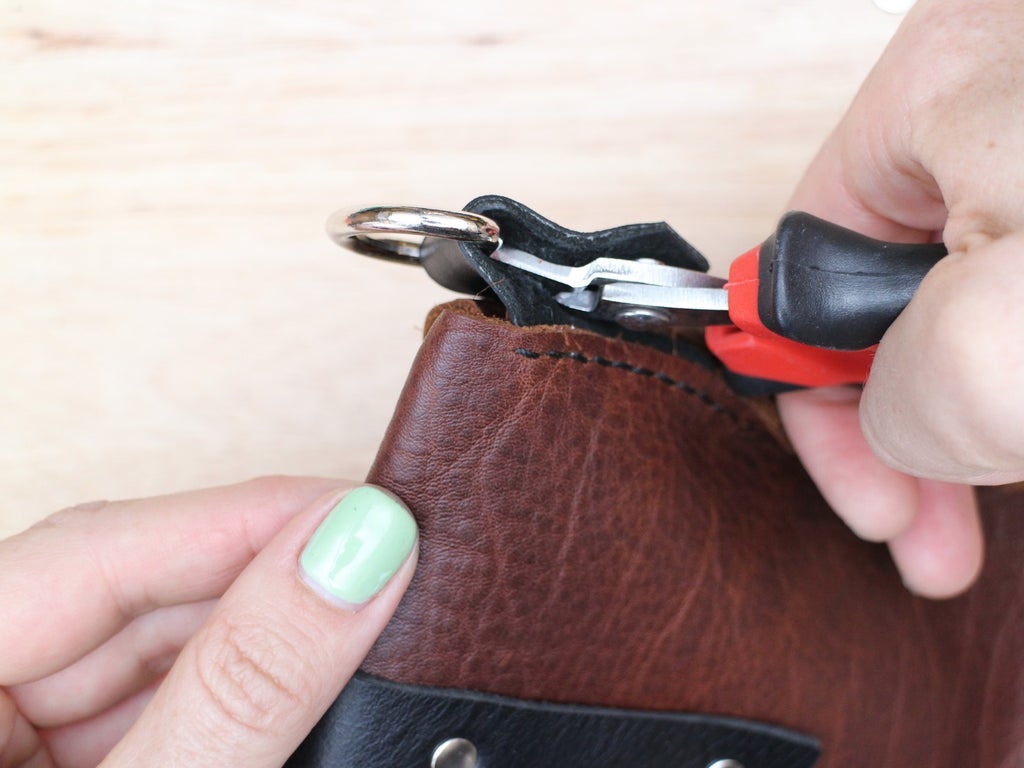
Once you've squeezed the stem a niggling, the top of the cap will usually pop off, and so you tin can remove the base of the cap and pull the whole thing out. Your leather may look a bit messy underneath, just that volition be covered up by another rivet.
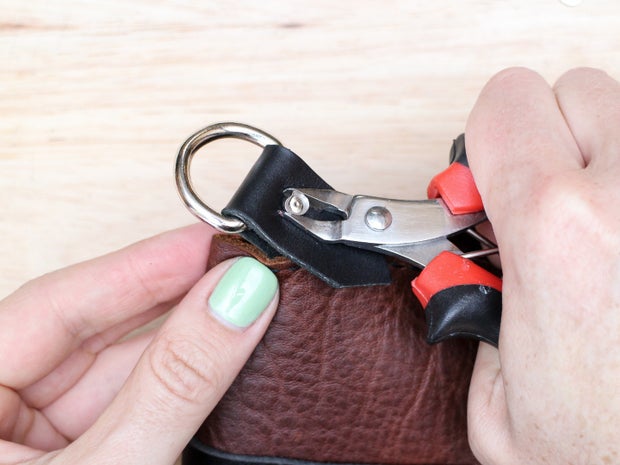
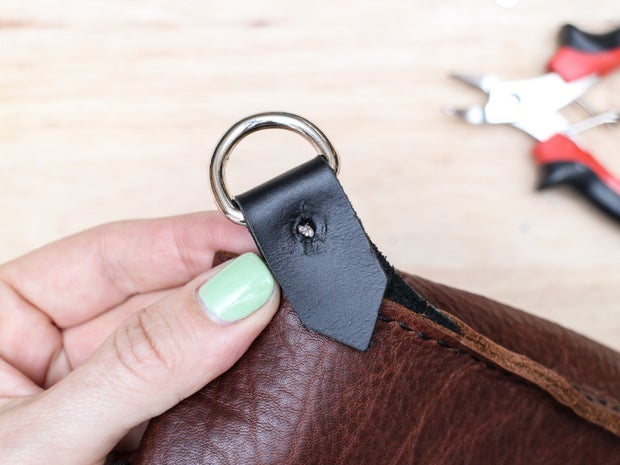
You can basically do the same thing with snaps, but information technology is a flake trickier since they are made of a harder and thicker metal.
Footstep iv: Rivets Quiz
{ "id": "quiz-1", "question": "When might you need to utilise a manual dial equally opposed to a rotary punch?", "answers": [ { "title": "to punch a hole in the middle of a large piece of leather", "right": true }, { "title": "to dial a pigsty through ii layers of sparse leather", "correct": faux } ], "correctNotice": "That's right! Rotary punches can't accomplish more than than most two inches in from the border of a slice of leather.", "incorrectNotice": "Nope. Guess again." } { "id": "quiz-2", "question": "True or False: If the stem of a rivet is besides long, it won't set properly.", "answers": [ { "title": "true", "correct": true }, { "title": "faux", "right": false } ], "correctNotice": "You're right! For rivets, size does affair.", "incorrectNotice": "No, try again." } { "id": "quiz-3", "question": "If you don't accept a rivet setter y'all tin set up rivets with:", "answers": [ { "title": "a hammer on a difficult flat surface", "correct": true }, { "championship": "pliers", "correct": simulated }, { "championship": "your blank hands", "correct": imitation } ], "correctNotice": "That's right. While a rivet setter is the best choice, pounding in a rivet with a hammer works pretty well too.", "incorrectNotice": "No, no, no. Requite that another try." } Footstep 5: Cutting Carte Slots in the Wallet
Before we utilize rivets to assemble the wallet, we demand to cut the two carte slots in the flaps. We didn't exercise this before because these card slots are going to take a hole punched at each end, and I wanted to teach you almost pigsty punching outset. The holes make the cuts in the leather less likely to tear, help cards fit more hands into the slots, and besides make the openings easier to cut.
Apply a punch to create a small hole at both ends of each slot y'all marked with the awl.
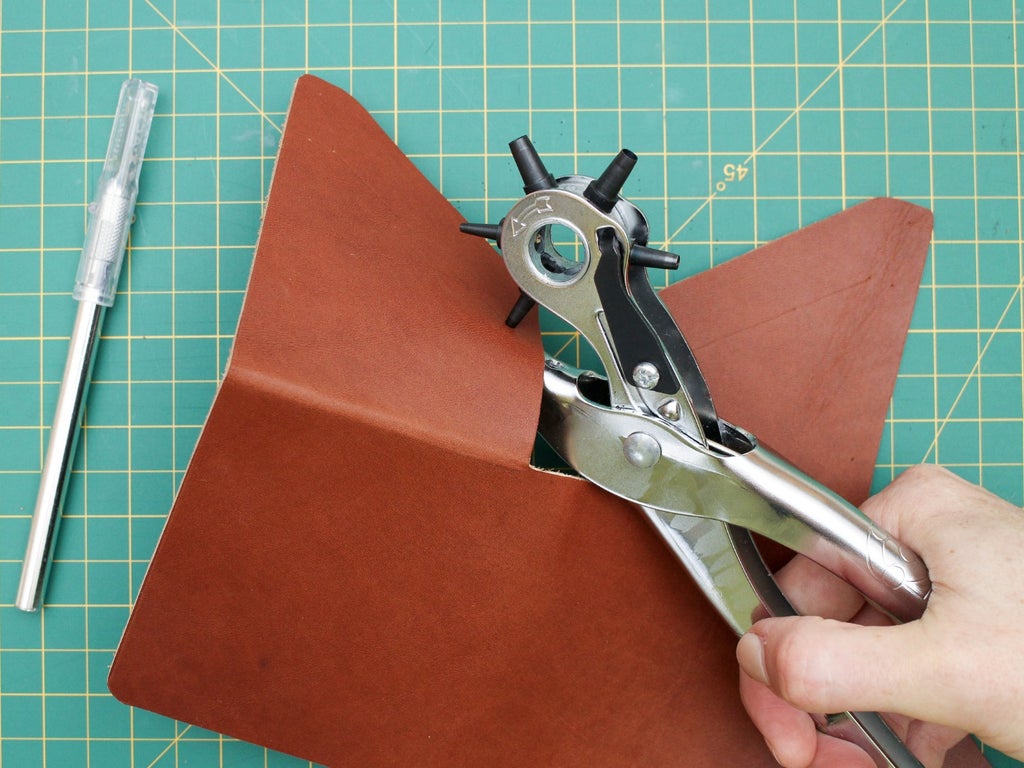
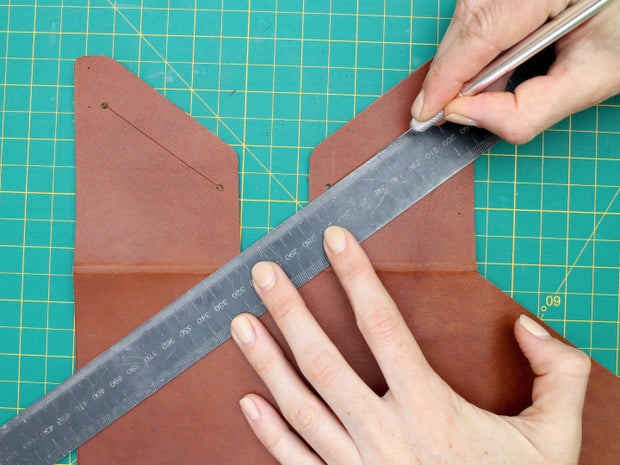
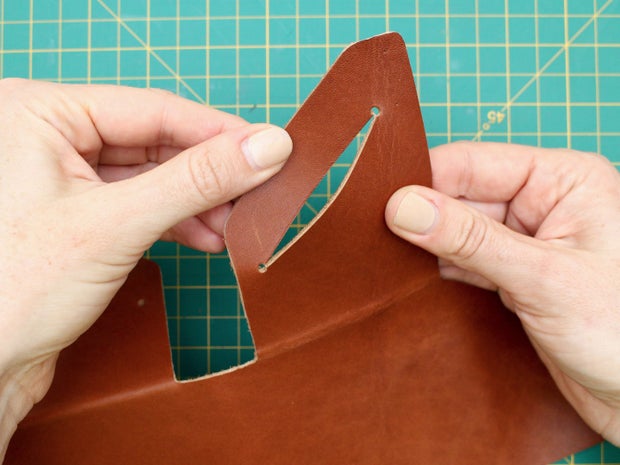
Then use a metal ruler and x-acto to cut between the holes. Exist careful not to overcut, holding your knife at closer to a xc angle when you reach the end of the cut helps forbid this.
Step 6: Rivet the Wallet
Now we are going to punch holes and rivet together the two folded flaps of the wallet.
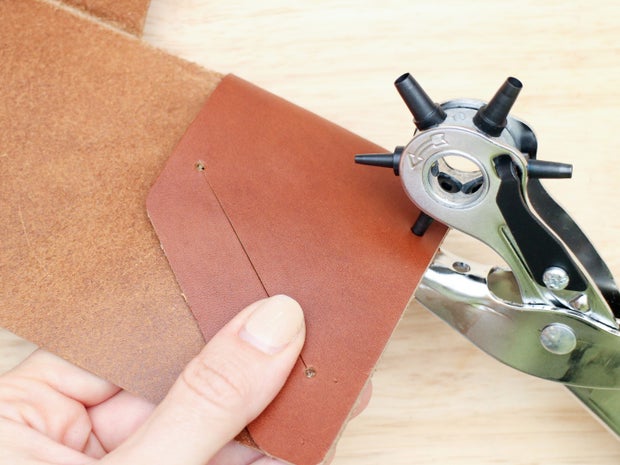
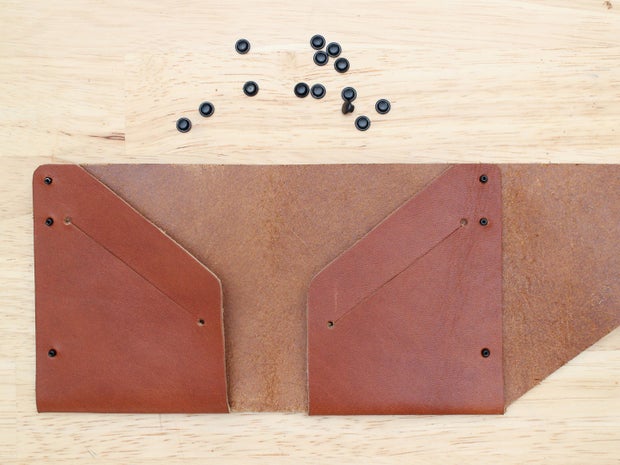
First, take i flap and fold it, lining information technology up so the outside edges of the leather are perfectly even and the fold is laying apartment. Holding the two layers in place with the flap facing up, utilise a rotary hole punch to punch a pigsty through both layers at 1 of the rivet positions you marked from the pattern.
Making holes this way, past punching both layers at once, ensures that your holes will be perfectly aligned. Now stick a rivet stud through this hole to help go on the leather aligned correctly every bit you dial the two other holes. Repeat on the second flap.
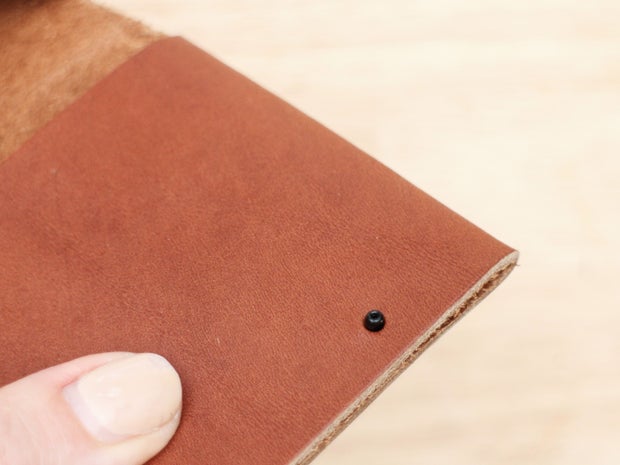
Stick rivet studs through all the holes, then add the rivet caps.
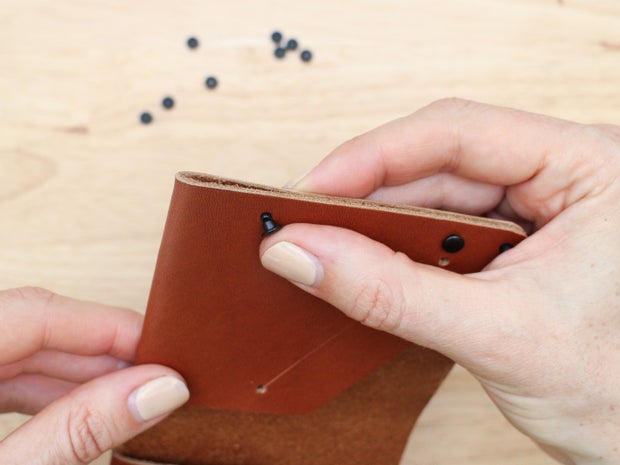
Apply your rivet setter and mallet, or hammer, to set the rivets.
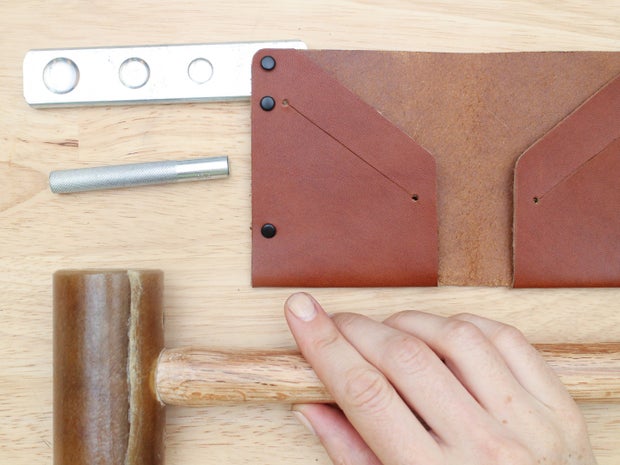
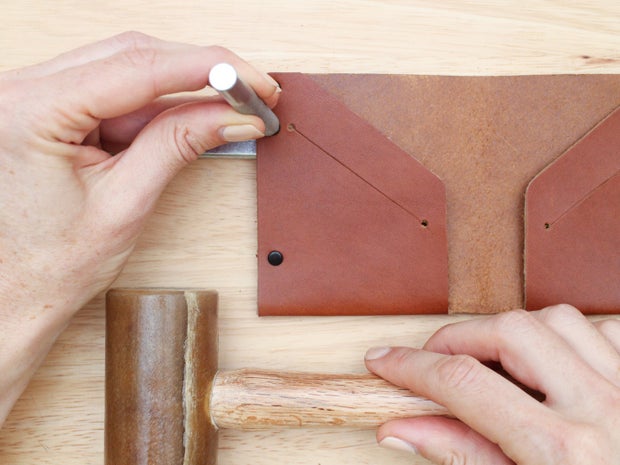
Pace vii: You're Almost Done!
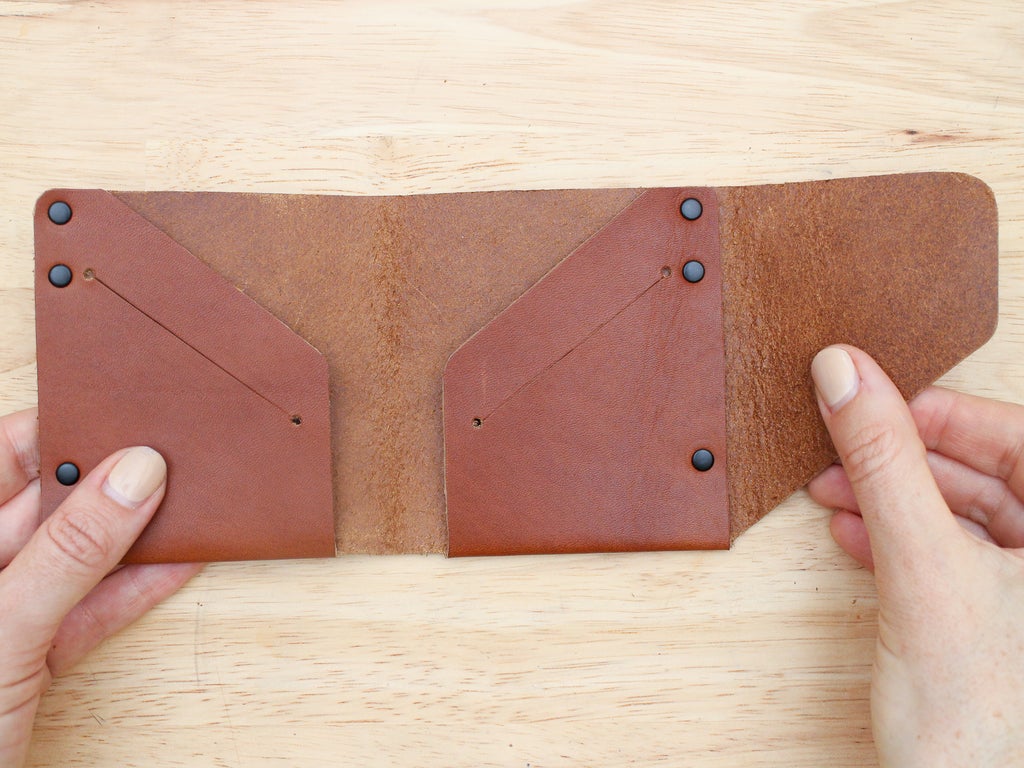
See how piece of cake it is to assemble something with rivets?! Whether you lot accept a rivet setter or just a hammer and a flat surface, rivets are a fast and secure way to make connections betwixt pieces of leather. Rivets aren't always the correct fashion to put something together, but when they are, they're amazingly convenient. Using rivets with dissimilar looks tin can likewise really add way to a design, and information technology's not unusual to use them purely for ornamentation.
In the next lesson we'll move on to another kind of hardware, and finish assembling the wallet by adding a snap closure.
Be the First to Share
Recommendations
Source: https://www.instructables.com/Leather-Hardware-Rivets/
0 Response to "How To Set A Rivet In Leather"
Post a Comment